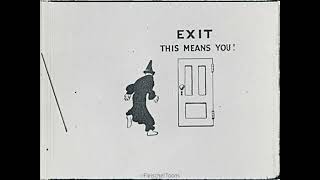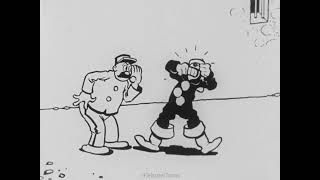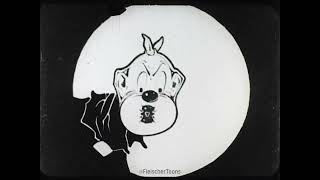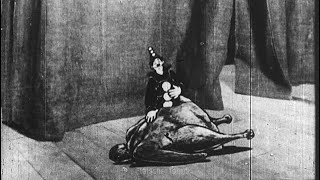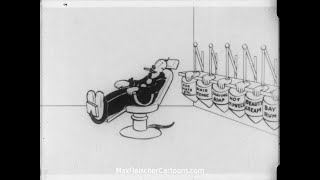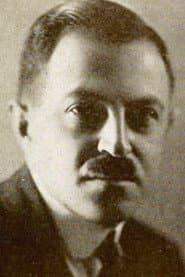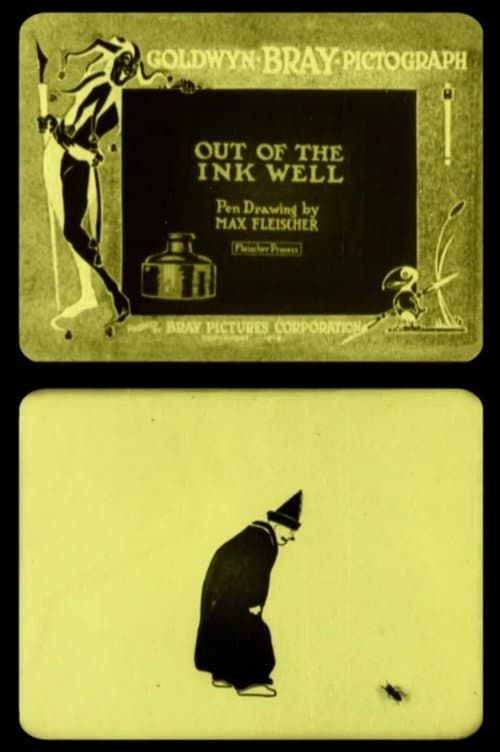
The Fleischer brothers' Out of the Inkwell series (1918-1929) is one of the most inventive bodies of work in early animation, and the shorts that launched it remain startling in their formal ambition. The premise is deceptively simple: Max Fleischer, appearing in live action at his drawing table, dips his pen in an inkwell and brings to life a mischievous clown character who climbs off the page and into the real world. The gag is ontological. The clown exists in a state of perpetual rebellion against his creator, escaping the boundaries of the drawn frame to interact with physical objects, real people, and the artist himself. The technical foundation was Max Fleischer's invention of the rotoscope, a device that projected live-action film footage onto a drawing surface so animators could trace over it frame by frame, producing movement of unprecedented fluidity. Dave Fleischer, then working as a clown at Coney Island, served as the live-action model, performing in a clown suit while being filmed for the rotoscope process. The results were immediately recognizable as something new. Where most animation of the period was stiff and schematic, the Inkwell clown moved with an eerie, elastic grace that seemed to belong to neither the drawn world nor the photographic one. The earliest shorts are brief, running only a few minutes, and the humor is elemental: the clown chases a fly, boxes a kangaroo, dodges his creator's attempts to erase him. But the interplay between animation and live action, between the artist and the thing he has made, gives the series a conceptual charge that goes well beyond slapstick. The clown would eventually be named Koko, gain a canine sidekick named Fitz (the prototype for Bimbo), and anchor a decade-long run that laid the groundwork for everything the Fleischer studio would later achieve with Betty Boop, Popeye, and their astonishing Superman shorts. Out of the Inkwell is where American animation first discovered that the medium could think about itself.