Kino-polis
HomeBrowseCollectionsReading RoomAbout
Kino-polis

A personal screening room for early cinema

© 2026 Kino-polis

◆
◆
◆
◆
◆
◆
◆

From: German Expressionism

The Last Laugh

1924 · Directed by F. W. Murnau

F.W. Murnau's devastating character study, told almost entirely without intertitles — a radical choice for 1924. Emil Jannings gives the performance of his career as an aging hotel doorman whose entire identity is wrapped up in his magnificent uniform and the prestige of his position at a grand Atlantic hotel. When he is demoted to lavatory attendant, his world collapses. Murnau and his cinematographer Karl Freund unleash the newly invented "unchained camera" technique, strapping the camera to a bicycle, a fire ladder, even Freund's chest, creating a fluid, subjective visual style that was years ahead of its time. The studio-imposed happy ending (acknowledged with a winking intertitle) does little to diminish the film's searing portrait of class, dignity, and the cruelty of aging in a status-obsessed society.

Watch Now

From: American Comedy

The Circus

1928 · Directed by Charlie Chaplin

The Chaplin film that Chaplin himself tried to forget — and one of his most purely entertaining. The Little Tramp, fleeing the police, stumbles into a circus tent and accidentally becomes the star of the show, his panicked attempts to escape funnier than anything the professional clowns can manage. When he falls in love with the bareback rider (Merna Kennedy), his happiness evaporates: she loves the handsome new tightrope walker instead. Chaplin's behind-the-scenes struggles during production were legendary — a bitter divorce, a studio fire, a year's halt — and perhaps that's why he omitted the film from his autobiography. But the work itself is pure magic: the lion cage sequence alone is worth the price of admission, and the bittersweet ending, with the Tramp watching the circus move on without him, is among his most quietly devastating.

Watch Now

From: Scandinavian Realism

Master of the House

1925 · Directed by Carl Theodor Dreyer

Carl Theodor Dreyer's quietly revolutionary domestic drama — a film that transforms a seemingly simple story about a tyrannical husband into a devastating study of emotional abuse and female solidarity. Viktor rules his household with petty cruelties and constant criticism until his elderly former nanny, summoned by his despairing wife, devises a scheme to show him what he's become. Dreyer, characteristically, is less interested in the plot mechanics than in the granular textures of daily life: the way bread is sliced, dishes are washed, and small humiliations accumulate. The film's meticulous observation of domestic space and its feminist sympathies were decades ahead of their time, anticipating Chantal Akerman and the kitchen-sink realists. A masterclass in making the mundane extraordinary.

Watch Now

Film of the Day

The Farmer Takes a Wife
Released 91 years ago today

The Farmer Takes a Wife

1935 · Victor Fleming

A farmer tries to convince a girl to leave her life on a canal boat to live with him on his farm.

Watch Now

Collections

View All

Silent 101

The silent era spans roughly three decades — from the Lumière brothers' first public screening in 1895 to the arrival of synchronized sound in the late 1920s — and contains some of the most inventive, visually stunning, and emotionally powerful filmmaking ever produced. These twenty films offer an introduction to the period's essential works and movements: the trick films that first revealed cinema's capacity for magic, the rise of narrative storytelling, the explosive creativity of German Expressionism and Soviet montage, the golden age of screen comedy, and the artistic peaks that still define what the medium can achieve. If you're new to silent film, start anywhere — every one of these will change your understanding of what early cinema was.

20 films

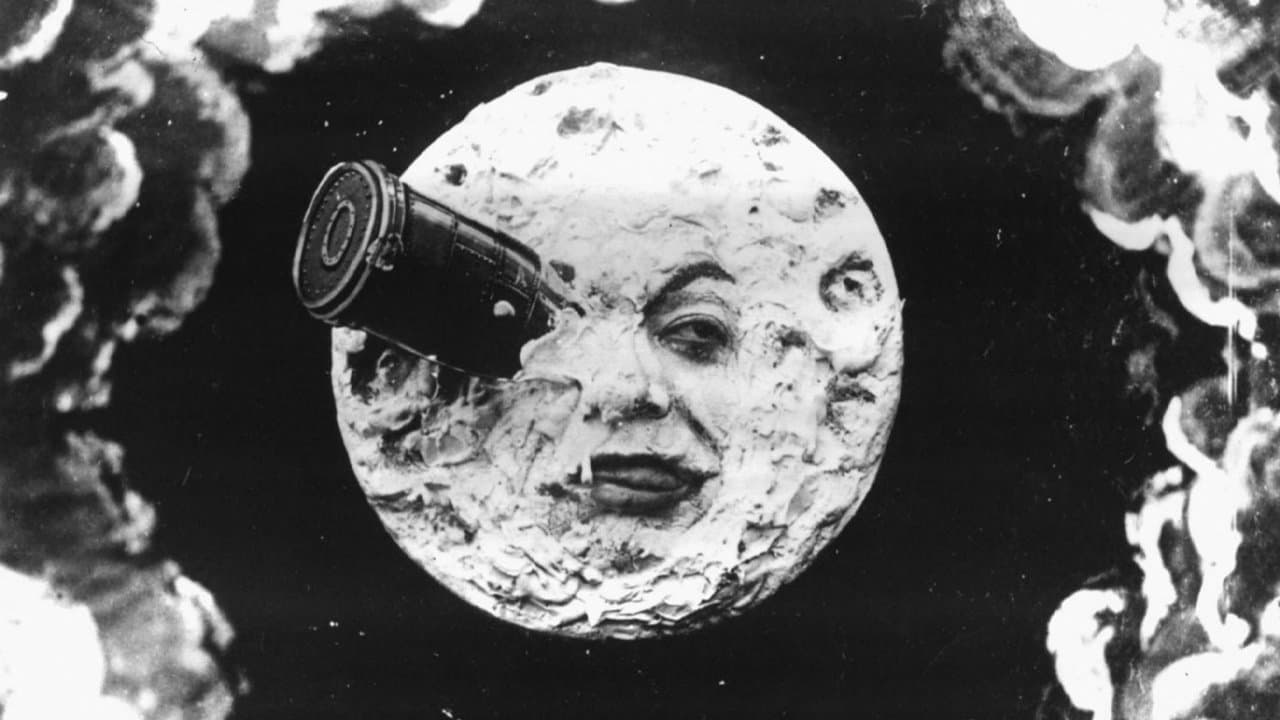
A Trip to the Moon
The Great Train Robbery
Broken Blossoms
The Cabinet of Dr. Caligari

Passion and Desire

Silent cinema understood desire better than most of what came after it. Without dialogue to explain away emotion, filmmakers had to find visual equivalents for longing, obsession, jealousy, and the reckless surrender of falling in love. The results were often more honest than words could have been. A lingering close-up of Greta Garbo's face in Flesh and the Devil communicates more about erotic power than any line of dialogue. The way Murnau's camera follows a couple through a crowded city in Sunrise captures the feeling of being so absorbed in another person that the rest of the world literally dissolves. The films in this collection explore the full range of what desire does to people. Some of these stories are tender, even hopeful: two lonely strangers meeting at Coney Island, a waterfront drifter rescuing a woman from the harbor. Others are brutal: a husband's greed consuming a marriage from the inside, a young woman ground down by the institutions that claim to protect her. What connects them is a refusal to simplify. These filmmakers understood that passion is rarely pure, that love and destruction often share a border, and that the most interesting stories live in that uncertain territory. Taken together, these twenty films also represent a remarkable diversity of national perspectives on desire. Swedish restraint, German obsession, Soviet pragmatism, Hollywood glamour, and Weimar-era frankness about sexuality all appear here, each bringing a distinct sensibility to the universal subject of what happens when people want what they cannot easily have.

20 films

Broken Blossoms
Erotikon
Way Down East
Foolish Wives

Soviet Montage

Soviet montage was born from a paradox: a country that could barely keep its projectors running produced the most radical rethinking of film form the medium has ever seen. In the years after the 1917 Revolution, a generation of filmmakers working with almost no resources — scavenged film stock, improvised equipment, unheated studios — took apart the basic unit of cinema, the edit, and rebuilt it as an instrument of thought. Their argument was simple and enormous: meaning in film does not live inside the shot. It lives in the collision between shots. The theorists disagreed with each other constantly, and those disagreements are the engine of the movement. Eisenstein believed in montage as intellectual shock — the juxtaposition of unrelated images to force the viewer into new understanding. Pudovkin believed in montage as emotional construction — linking images to build feeling the way a novelist builds a sentence. Vertov rejected fiction altogether and argued that the camera's purpose was to capture life and reorganize it into patterns invisible to the naked eye. Dovzhenko ignored all three and made films that felt like poems, lyric and earthy and impossible to theorize. Kuleshov, the teacher who started it all, had proven with a single experiment that the same actor's face, juxtaposed with different images, appeared to express completely different emotions — meaning the audience, not the performer, created the feeling. This collection traces the movement from its first experiments in the early 1920s through its extraordinary peak in the late twenties, when Soviet cinema was producing masterworks at a rate that has never been matched, to the moment when the state's demand for ideological clarity made the movement's formal ambitions untenable. Start with Eisenstein if you want to be overwhelmed. Start with Barnet if you want to be surprised. Start with Vertov if you want to see what cinema looks like when it refuses to tell stories at all.

19 films

Aelita: Queen of Mars
The Extraordinary Adventures of Mr. West in the Land of the Bolsheviks
Kino Eye
Strike

Spotlight: Anna May Wong

Anna May Wong was Hollywood's first Chinese American film star and one of the most consequential, and most wronged, figures in the history of cinema. Born Wong Liu Tsong in Los Angeles in 1905, she broke into films as a teenager and quickly demonstrated a screen presence that critics consistently singled out even when the films around her were mediocre. Her career is a study in paradox: she was internationally celebrated as a fashion icon and a major star in Europe, while American studios kept her trapped in stereotypical Dragon Lady and exotic villain roles, systematically denied her the leading parts she deserved. Anti-miscegenation laws literally prevented her from kissing a white co-star on screen, which effectively barred her from most romantic leads. She responded with remarkable resourcefulness, founding her own production company, traveling to Europe where she was treated as the star she was, mastering French and German to act in multiple language versions of films, and performing Shakespeare on stage opposite Laurence Olivier. She died in 1961 at fifty-six, just before the tide of history might finally have turned in her favor, but her legacy as a pathbreaker for Asian American representation in Hollywood is now rightly celebrated. The films collected here trace her career from a teenage extra to an international star, and they document both the brilliance of her talent and the constraints that prevented it from being fully realized.

13 films

The Red Lantern
Outside the Law
The Toll of the Sea
Drifting

Recently Added

View All
The Blood Ship

The Blood Ship

1927
George B. Seitz
Where East Is East

Where East Is East

1929
Tod Browning
The Captive

The Captive

1915
Cecil B. DeMille
The Noon Whistle

The Noon Whistle

1923
George Jeske
Return to Reason

Return to Reason

1923
Man Ray
The Mysteries of the Chateau of Dice

The Mysteries of the Chateau of Dice

1929
Man Ray, Jacques-André Boiffard
Limite

Limite

1931
Mário Peixoto
East Side, West Side

East Side, West Side

1927
Allan Dwan
Hell's Heroes

Hell's Heroes

1929
William Wyler
Chicago

Chicago

1927
Frank Urson
A Story of Floating Weeds

A Story of Floating Weeds

1934
Yasujirō Ozu
The Trail of '98

The Trail of '98

1928
Clarence Brown

Pioneers of Cinema

Charlie Chaplin

Charlie Chaplin

1889–1977

Buster Keaton

Buster Keaton

1895–1966

Alice Guy-Blaché

Alice Guy-Blaché

1873–1968

Oscar Micheaux

Oscar Micheaux

1884–1951

Harold Lloyd

Harold Lloyd

1893–1971

Louise Brooks

Louise Brooks

1906–1985

Fritz Lang

Fritz Lang

1890–1976

Clara Bow

Clara Bow

1905–1965

F. W. Murnau

F. W. Murnau

1888–1931

Georges Méliès

Georges Méliès

1861–1938

D.W. Griffith

D.W. Griffith

1875–1948

Sergei Eisenstein

Sergei Eisenstein

1898–1948

Carl Theodor Dreyer

Carl Theodor Dreyer

1889–1968

Robert Wiene

Robert Wiene

1873–1938

Alfred Hitchcock

Alfred Hitchcock

1899–1980

Lon Chaney

Lon Chaney

1883–1930

Lillian Gish

Lillian Gish

1893–1993

Conrad Veidt

Conrad Veidt

1893–1943

Erich von Stroheim

Erich von Stroheim

1885–1957

Douglas Fairbanks

Douglas Fairbanks

1883–1939

Mary Pickford

Mary Pickford

1892–1979

Films Like “The Blood Ship”

Danger Lights

Danger Lights

1931
Juno and the Paycock

Juno and the Paycock

1930
The Late Mathias Pascal

The Late Mathias Pascal

1925
The Scar of Shame

The Scar of Shame

1929
Pandora's Box

Pandora's Box

1929
Asphalt

Asphalt

1929
Sinners in Paradise

Sinners in Paradise

1938
Male and Female

Male and Female

1919
Beggars of Life

Beggars of Life

1928
The Dawn Patrol

The Dawn Patrol

1930
Born Reckless

Born Reckless

1930
Dixiana

Dixiana

1930

Action

View All
The Three Must-Get-Theres

The Three Must-Get-Theres

1922
Zorro Rides Again

Zorro Rides Again

1937
Serpent

Serpent

1925
Tell It to the Marines

Tell It to the Marines

1926
By the Law

By the Law

1926
The Montana Kid

The Montana Kid

1931
The Trail of '98

The Trail of '98

1928
Life of an American Fireman

Life of an American Fireman

1903
Men Without Women

Men Without Women

1930
20,000 Leagues Under the Sea

20,000 Leagues Under the Sea

1916
The Dawn Patrol

The Dawn Patrol

1930
Easy Street

Easy Street

1917

Adventure

View All
Die Nibelungen: Kriemhild's Revenge

Die Nibelungen: Kriemhild's Revenge

1924
Chang: A Drama of the Wilderness

Chang: A Drama of the Wilderness

1927
Zorro Rides Again

Zorro Rides Again

1937
Ivanhoe

Ivanhoe

1913
Sumurun

Sumurun

1920
Ben-Hur: A Tale of the Christ

Ben-Hur: A Tale of the Christ

1925
Peter Pan

Peter Pan

1924
The Holy Mountain

The Holy Mountain

1926
The Magic Cloak of Oz

The Magic Cloak of Oz

1914
Robin Hood

Robin Hood

1922
East of Borneo

East of Borneo

1931
The Cave of the Silken Web

The Cave of the Silken Web

1927

Animation

View All
The New Gulliver

The New Gulliver

1935
The Enchanted Drawing

The Enchanted Drawing

1900
The Sinking of the Lusitania

The Sinking of the Lusitania

1918
Fantasmagorie

Fantasmagorie

1908
The Haunted Hotel

The Haunted Hotel

1907
Interplanetary Revolution

Interplanetary Revolution

1924
How a Mosquito Operates

How a Mosquito Operates

1912
Out of the Inkwell

Out of the Inkwell

1919
And the Villain Still Pursued Her; or, the Author's Dream

And the Villain Still Pursued Her; or, the Author's Dream

1906
Black and White

Black and White

1932
Victorious Destination

Victorious Destination

1939
The Adventures of Baron Munchausen

The Adventures of Baron Munchausen

1929

All Films

View All
13 Washington Square

13 Washington Square

1928
Melville W. Brown
20,000 Leagues Under the Sea

20,000 Leagues Under the Sea

1916
Stuart Paton
7th Heaven

7th Heaven

1927
Frank Borzage
A Christmas Carol

A Christmas Carol

1910
J. Searle Dawley, Ashley Miller, Charles Kent
A Corner in Wheat

A Corner in Wheat

1909
D.W. Griffith
A Cottage on Dartmoor

A Cottage on Dartmoor

1929
Anthony Asquith
A Daughter of Brahma

A Daughter of Brahma

1919
August Blom
A Daughter Of Destiny

A Daughter Of Destiny

1928
Henrik Galeen
A Dog's Life

A Dog's Life

1918
Charlie Chaplin
A Farewell to Arms

A Farewell to Arms

1932
Frank Borzage
A Film Johnnie

A Film Johnnie

1914
George Nichols
A Flirt's Mistake

A Flirt's Mistake

1914
George Nichols