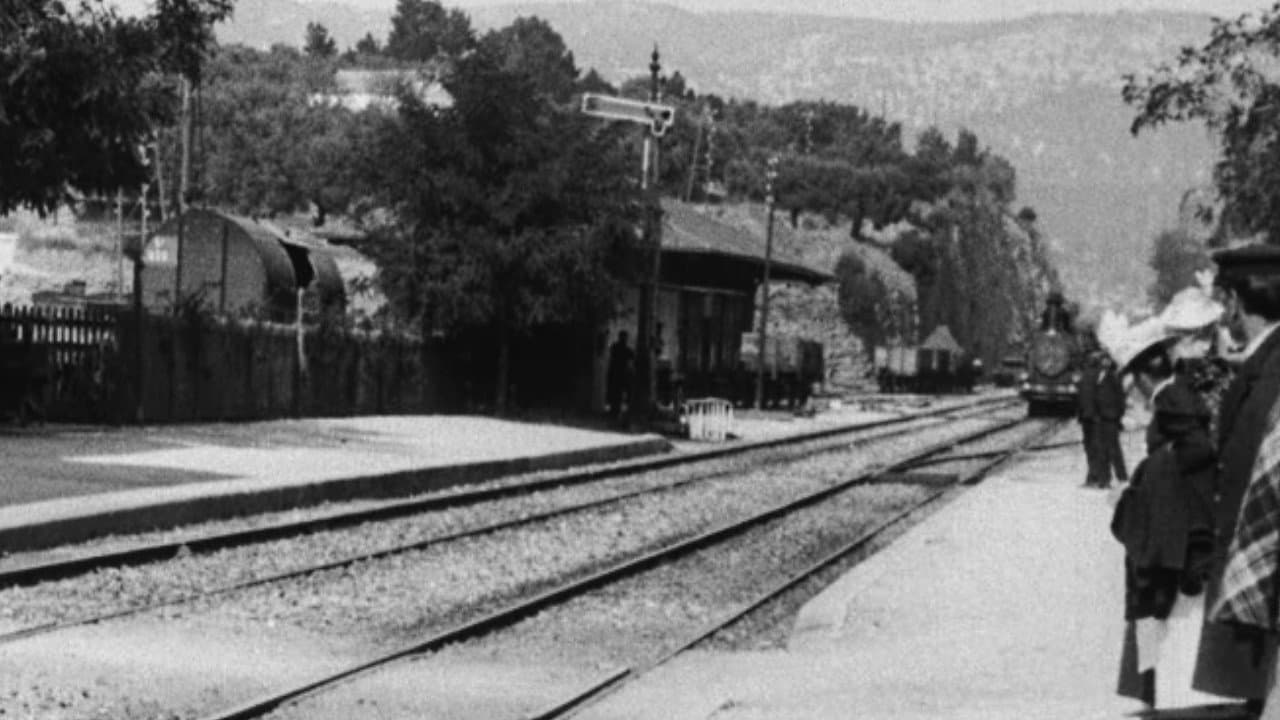
The Arrival of a Train at La Ciotat
L'arrivée d'un train à La Ciotat
1896 · 1 min · FR
Directed by Louis Lumière, Auguste Lumière
Louis Lumière at the family station in La Ciotat: a train enters on the diagonal, grows, stops; passengers step down and walk the platform. Fifty seconds. The Catalogue Lumière lists more than one take; the familiar print (no. 653) was shot in the summer of 1897. Martin Loiperdinger found no contemporary report of a stampede. The founding story is later: writers converting the locomotive's increase in size into a panic the Grand Café never recorded.
Watch The Arrival of a Train at La Ciotat
Public domain presentation
Public Domain Source
Wikimedia Commons · FM-54; File:Arrival of a Train at La Ciotat (The Lumière Brothers, 1895).webm; 540x360
In First Steps
Available Subtitles
No subtitle tracks are currently listed.
From the Reading Room
Cast
Principal players
Crew
Louis Lumière
cinematographer